The Union Public Service Commission has announced mandatory face authentication for all candidates appearing in UPSC examinations. The AI-powered biometric verification system aims to strengthen exam integrity and prevent impersonation following successful pilot testing in September 2025.
Table of Contents

Biometric Security for Civil Services Exams
UPSC Face Authentication Details
| Detail | Information |
|---|---|
| Announcement Date | January 10, 2026 |
| Technology | AI-enabled facial recognition |
| Verification Time | 8-10 seconds per candidate |
| Pilot Program | September 2025 (NDA/CDS exams) |
| Pilot Location | Select centres in Gurugram |
| Applicable Exams | IAS, IFS, IPS, and all UPSC exams |
| Implementation Partner | National e-Governance Division (NeGD) |
Strengthening Examination Integrity
“All candidates appearing in the UPSC examination will undergo face authentication at the venue,” states the official note on the Commission’s website. The measure further strengthens the integrity of the examination process for India’s most competitive government recruitment tests.
UPSC conducts various recruitment examinations including the prestigious Civil Services Exam for selecting officers of the Indian Administrative Service (IAS), Indian Foreign Service (IFS), and Indian Police Service (IPS), among others.
Successful Pilot Implementation
UPSC successfully tested AI-enabled facial authentication technology during the NDA (National Defence Academy) and NA (Naval Academy) II Examination, 2025, and CDS (Combined Defence Services) II Examination, 2025, held on September 14, 2025, at select centers in Gurugram.
The pilot program digitally matched candidates’ facial images with photographs submitted in their registration forms, demonstrating the system’s effectiveness and reliability for large-scale deployment.
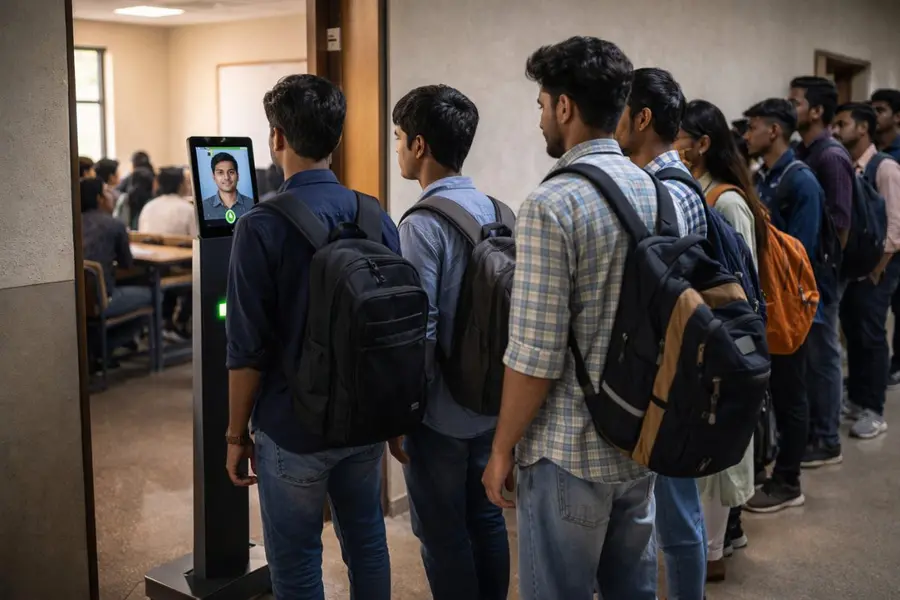
Rapid Verification Process
The new system reduced verification time to an average of just 8-10 seconds per candidate, according to UPSC Chairman Ajay Kumar. This significantly streamlines the entry process while adding an extra layer of security against impersonation and fraud.
The rapid processing ensures minimal disruption to examination schedules while maintaining rigorous identity verification standards crucial for competitive government exams.
How the System Works
The face authentication process is candidate-friendly and straightforward. Candidates present their admit card and valid ID proof as usual. A camera then captures their live facial image, which is instantly compared with the photograph submitted during the application process.
If the match is successful, candidates proceed to the examination hall. In case of mismatch, additional verification steps may be conducted by exam authorities. Candidates are advised to upload clear, recent photographs during application to avoid any complications on exam day.
Addressing Past Integrity Concerns
The implementation follows past incidents that raised examination integrity concerns, including the high-profile Puja Khedkar case involving alleged forgery of identity and PwBD certificates. UPSC registered criminal cases for such misrepresentation attempts.
These incidents underscored the need for stronger technological safeguards beyond traditional document verification methods to protect the credibility of India’s most prestigious competitive examinations.

Benefits of Digital Verification
Face authentication offers multiple advantages: significantly reduced impersonation risks, elimination of human error in identity verification, faster entry processing at exam centers, enhanced security against fraud, and transparent candidate verification.
The digital system removes scope for manual verification errors while creating an auditable trail of candidate identification, ensuring accountability throughout the examination process.
Complementary to Existing Checks
Face authentication works alongside existing verification procedures including admit card and ID proof checks. It doesn’t replace traditional security measures but adds an additional technological layer that makes fraudulent entry practically impossible.
This multi-layered approach ensures comprehensive security while maintaining the examination process’s efficiency and candidate convenience.
For official updates, visit UPSC’s website. Stay updated on education news at TechnoSports.
FAQs
When will UPSC face authentication be mandatory?
Face authentication is now mandatory for all UPSC examinations following the January 10, 2026 announcement after successful pilot testing in September 2025.
How long does face authentication take?
The AI-powered system completes verification in just 8-10 seconds per candidate, streamlining entry without causing delays at examination centers.