Apple’s upcoming smart glasses will feature a custom chip based on Apple Watch’s S10 SiP (System-in-Package) rather than iPhone processors, solving critical battery life challenges. The ultra-low-power approach enables lightweight, all-day wearables unlike Vision Pro’s 2.5-3 hour limitation with its hefty 35.9WHr battery.
Expected to launch in late 2026 or early 2027, the glasses compete directly with Meta Ray-Bans while requiring iPhone connectivity for advanced AI processing and functionality.
Table of Contents

Apple Smart Glasses Expected Specifications
| Feature | Details |
|---|---|
| Chipset | Custom SoC based on Apple Watch S10 |
| Launch Timeline | Late 2026 – Early 2027 |
| Battery Strategy | Ultra-low-power, likely under 800mAh |
| Connectivity | Requires iPhone or Mac pairing |
| Display | First-gen lacks display; 2nd-gen adds in-lens |
| AI Integration | Apple Intelligence, Visual Intelligence |
| Cameras | Multiple cameras for photos, video, AI vision |
| Design | Multiple frame styles, metal/plastic options |
Apple Watch S10 SiP Enables All-Day Usage
The S10 chip in Apple Watch Ultra 3 achieves 42 hours regular use and 72 hours in Low Power Mode—demonstrating the efficiency Apple needs for smart glasses. The dual-core configuration with 4-core Neural Engine provides sufficient compute capabilities while consuming a fraction of iPhone chipset power.
Reports indicate Apple needs performance equivalent to iPhone A-series while consuming one-tenth the power. The Apple Watch SiP already meets this requirement, making it the ideal candidate for powering lightweight glasses under 800mAh battery capacity.
Explore more about wearable technology innovations and battery optimization strategies.
First-Gen Won’t Feature Display
Bloomberg reports the initial 2026 model will lack an in-lens display, focusing purely on cameras, microphones, AI capabilities, and audio output. The second-generation 2027 version could add displays running dual operating systems—visionOS when paired with Mac, lightweight mobile interface with iPhone.
This phased approach allows Apple to perfect power efficiency and weight before adding battery-intensive display technology.
Competition with Meta Ray-Bans
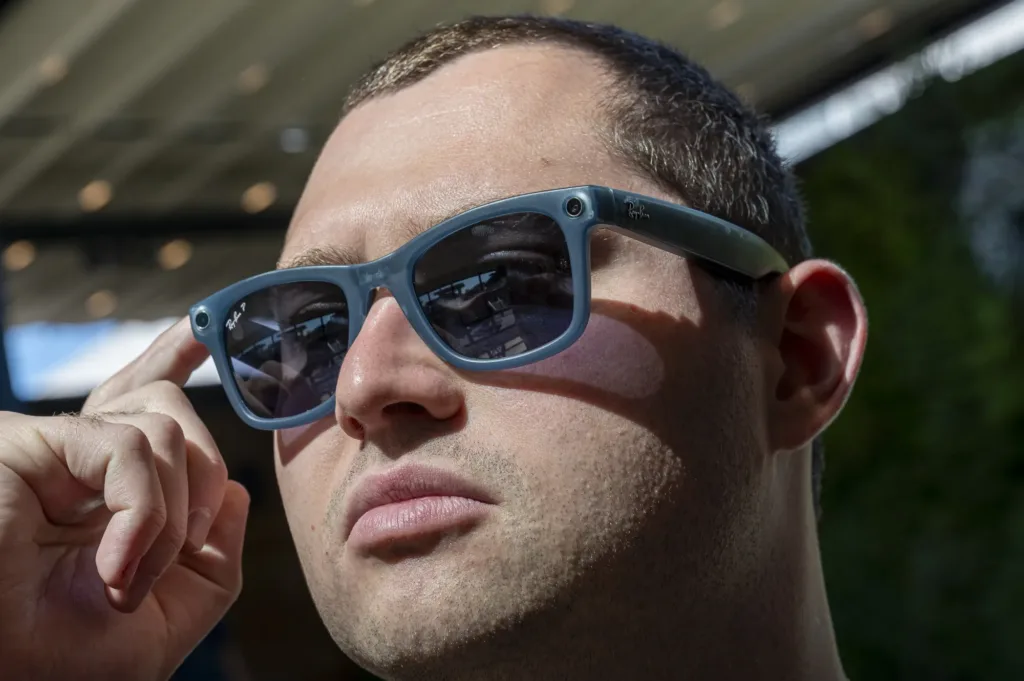
Apple’s design targets Meta’s successful Ray-Ban smart glasses ($380 starting price), which already feature cameras, AI integration via Meta Llama and Google Gemini, plus audio playback. According to Bloomberg sources, Apple employees describe their glasses as “similar to Meta’s glasses, but better made.”
Key differentiators include Apple’s proprietary AI models, tight iPhone ecosystem integration, and multiple style options positioning glasses as fashion accessories like Apple Watch.
Stay updated on Apple product launches and smart glasses market trends.

Development Challenges Overcome
Apple previously explored true AR glasses paired with Macs but cancelled the project (codenamed N107) due to insufficient processing power and battery drain concerns. The shift toward Meta Ray-Ban competitors with Apple Watch chips represents a more practical near-term strategy while continuing long-term AR development.
Tim Cook reportedly made smart glasses a “top priority” to beat Meta to market with true AR capabilities.
FAQs
When will Apple smart glasses launch?
Late 2026 or early 2027, with first-gen lacking display and second-gen adding in-lens screens.
What chipset will Apple smart glasses use?
Custom chip based on Apple Watch S10 SiP for ultra-low power consumption and all-day battery.