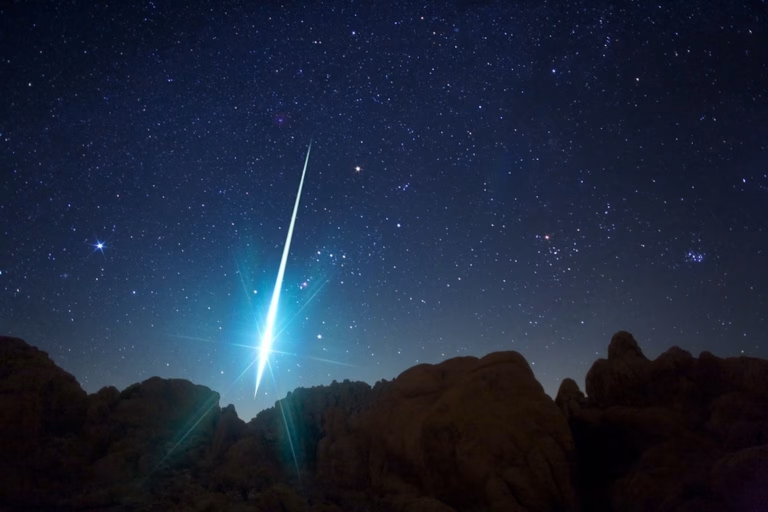
Skywatchers are preparing for a thrilling display as the Geminid meteor shower—widely considered the most brilliant annual meteor show—reaches its peak. This year’s peak arrives on the night of December 13 into the morning of December 14, promising a prolific display of bright, multicolored ‘shooting stars’ across the night sky.
Unlike its summer counterpart, the Perseids, the Geminids often boast higher rates, with the potential for up to 150 meteors per hour under ideal conditions, making it a reliable must-see event for amateur astronomers and casual observers alike.
Geminid Meteor Shower; When and Where to See the Peak Activity
The Geminids are active throughout early to mid-December, but the true spectacle will occur during the shower’s maximum intensity. The peak is set for the overnight hours between Saturday, December 13, and Sunday, December 14.
The best viewing window typically opens up after midnight and extends until the pre-dawn hours, a time when the shower’s radiant point, the constellation Gemini, is highest in the sky. However, a unique feature of the Geminids is that meteors can begin appearing as early as 9 p.m. local time, offering a fantastic opportunity for earlier viewing.

Viewing Conditions for This Year
- Peak Date: Night of December 13–14.
- Hourly Rate: Up to 120-150 meteors per hour (ZHR) in very dark locations.
- Moon Phase: The Moon will be a waning crescent, which is highly favorable for visibility as it will not rise until around 1:30 a.m. local time, ensuring several hours of dark, moonless skies during the prime viewing period.
The Asteroid Anomaly: What Makes Geminids Unique
While nearly all other major meteor showers originate from the icy debris left behind by comets, the Geminids are an exception to this cosmic rule. This shower is born from the debris stream of an asteroid known as 3200 Phaethon.
Discovered in 1983, 3200 Phaethon is a rocky, Sun-orbiting body, which has led some scientists to speculate whether it is an asteroid or a “rock comet.” The dense, stony nature of these meteoroids means they hit the atmosphere slower than typical cometary dust, producing fireballs that are often brighter and leave longer-lasting trails.
Furthermore, the Geminid meteors are known for their striking, often multi-colored appearance. These bright streaks can flash in white, yellow, green, red, and blue, a colorful phenomenon caused by the presence of metallic trace elements like sodium and calcium burning up in Earth’s atmosphere—similar to how vibrant colors are produced in fireworks.
Essential Tips for Optimal Meteor Viewing
Watching a meteor shower requires patience and preparation. No telescopes or binoculars are necessary; in fact, they will narrow your field of view and make the experience more difficult.
To maximize your chances of witnessing the Geminids’ breathtaking performance, follow these simple steps:
- Find a Dark Sky Site: Escape light pollution by driving away from city and street lights. This is the single most important factor for seeing the faint meteors.
- Allow for Eye Adjustment: Give your eyes at least 15 to 30 minutes to fully adapt to the dark; avoid looking at bright screens like a cellphone during this time.
- Look Away from the Radiant: While the meteors appear to radiate from the constellation Gemini (near the bright star Castor), it is best to look slightly away—about 45 degrees—to catch the longer, more impressive streaks.
- Get Comfortable and Stay Warm: December nights are cold. Bring a sleeping bag, blankets, and a comfortable lounge chair. Lying flat on your back offers the widest view of the sky. A flask of a hot beverage is highly recommended.
BJP-Led NDA Breaks 45-Year Barrier to Secure Historic Win in Thiruvananthapuram Corporation