Twelve Indian Super League clubs have issued an urgent appeal to All India Football Federation President Kalyan Chaubey, warning that the league faces commercial collapse as the Master Rights Agreement with Football Sports Development Limited expires on December 8, 2025. The clubs, excluding East Bengal, have demanded immediate constitutional amendments and government intervention to prevent what they describe as irreversible damage to Indian football’s ecosystem.
The coordinated letter, sent just three days before the MRA deadline, highlights the desperate financial situation facing clubs as central revenue streams have ceased entirely. The appeal marks a critical juncture for the ISL, which has been on hold since July 2025 following the failure of the AIFF’s tender process to attract any commercial bidders.
Table of Contents
Constitutional Roadblocks Derail Tender Process
The clubs have filed an interim application before the Supreme Court seeking the removal of constitutional impediments that they argue rendered the tender process commercially unworkable. The contentious provisions include Articles 1.21, 1.54, and 63 of the AIFF Constitution, which clubs claim create technical roadblocks that potential bidders cannot navigate.
Article 1.21 defines the financial year between April 1 and March 31, but with the ISL season yet to be scheduled, commercial partners require flexibility to enter contracts outside this rigid window. Meanwhile, Articles 1.54 and 63 concern ownership authorization and operational control of the league, both of which currently vest entirely with the AIFF.
The clubs emphasized that their concerns align with conclusions reached by Justice L. Nageswara Rao’s committee and consultancy firm KPMG during the earlier Request for Proposal process. Both entities identified constitutional and commercial constraints around ownership, operational control, overall costs, and promotion-relegation structures that made the tender commercially unviable.
Central Revenue Collapse Creates Financial Crisis
In their letter to Chaubey, the ISL clubs painted a stark picture of their financial predicament. The expiry of the MRA has eliminated central revenue entirely, which historically formed the principal income source enabling clubs to manage salaries, infrastructure, and sporting operations.
The uncertainty has triggered a cascade effect, with local sponsors withdrawing or pausing commercial commitments, leaving clubs with ongoing contractual obligations but virtually no income. The clubs stated that while the majority have continued honoring salaries and contractual dues to players and staff in good faith, the current situation is approaching commercial impossibility and risks rendering ongoing operations untenable.
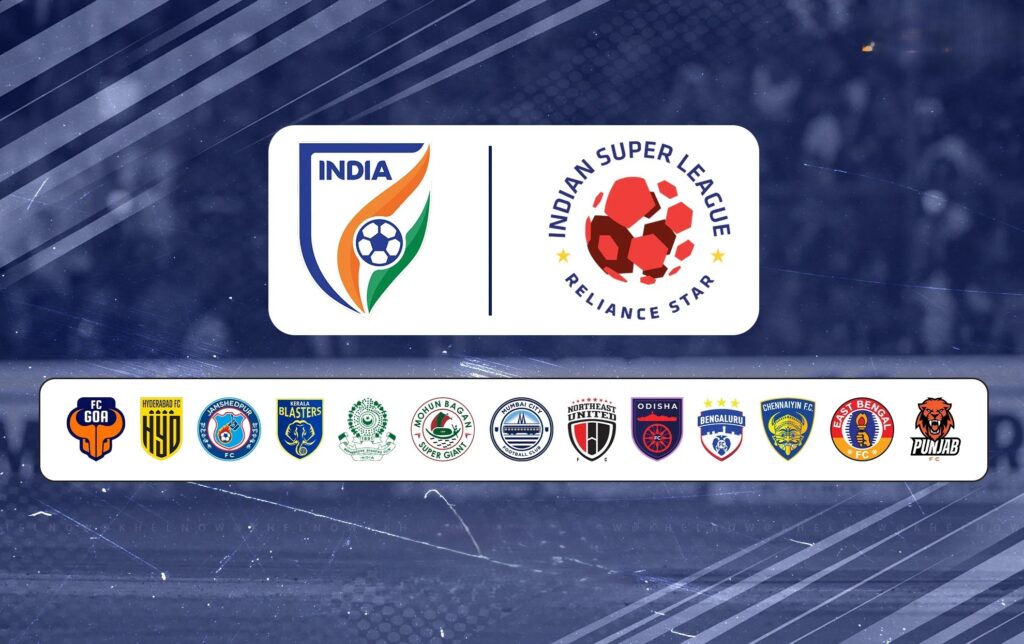
The signatories to the letter include FC Goa, Sporting Club Delhi, NorthEast United, Jamshedpur, Bengaluru FC, Mohun Bagan Super Giant, Chennaiyin FC, Mumbai City FC, Kerala Blasters, Punjab FC, Odisha FC, and Mohammedan Sporting, with newly promoted Inter Kashi also joining the representation. For nearly eleven years, these clubs have continued investing substantially in Indian football despite persistent losses, sustained by predictable league structures and guaranteed central revenue.
AIFF Possesses Constitutional Amendment Authority
The clubs reminded the federation that under the newly adopted constitution, the AIFF possesses the authority to amend its own statutes, including those impeding commercial operation of the league, without requiring judicial directions. They urged Chaubey to exercise this power with utmost urgency, in consultation with the government where necessary, to prevent the sport from being imperiled by procedural delay.
The Supreme Court at its last hearing requested the intervention and assistance of the Union of India to help resolve the constitutional and commercial challenges facing the ecosystem. Following this judicial request, the clubs have formally asked the AIFF to approach the Government of India to extend support to their interim application, ensuring these issues can be resolved in coordination with all stakeholders.
The clubs stressed that decisive constitutional action by the federation, where permissible, would greatly expedite commercial certainty and restore investor confidence. They warned that a report on actions proposed by the Union of India or the AIFF must be filed on or before December 8 so that the Court is apprised of the remedial pathway and commercial certainty can be restored without further delay.
Strict Timeline Required for Revised Tender
Should the AIFF proceed with a revised tender process, the clubs insisted it must only be undertaken after constitutional impediments are removed or clarified, ensuring the tender has a legally tenable and commercially viable foundation. They demanded the process be conducted within a strict and non-extendable timeline, completed well before the end of December.
The clubs argued that only a hard time-bound tender window of this nature provides any realistic opportunity to stabilize the commercial structure of the league and salvage the current season. They emphasized that beyond the tender itself, a long-term solution must be formulated without delay, as a temporary or stop-gap arrangement would provide momentary relief but fail to address underlying structural issues.
Club Consortium Ownership Model Proposed
In a significant proposal, the clubs requested that should the revised tender not result in a suitable commercial partner, the AIFF consider a framework under which ISL clubs may collectively form a consortium to own and operate the league as majority owners, alongside the federation and aligned commercial, broadcast, and private investors.
This approach mirrors successful models in global football, including the English Premier League where clubs collectively own the competition. The proposal reflects what clubs describe as their long-term commitment to Indian football and is consistent with international best practices.
The consortium model was discussed at a December 3 meeting in New Delhi where Mohun Bagan Super Giant CEO Vinay Chopra pitched the idea. It bears similarity to an earlier proposal by FSDL to the AIFF, under which 60 percent of equity would be shared equally among ISL clubs, 26 percent transferred to FSDL, and the remaining 14 percent to the federation.
East Bengal’s Divergent Position
Notably, East Bengal was the only ISL club that did not sign the letter to President Chaubey. At the meeting with Sports Minister Mansukh Mandaviya on Wednesday, East Bengal advocated for an AIFF-owned and run league, contrary to the consensus reached among other ISL clubs.
East Bengal suggested cash-strapped AIFF should be given organizational duties, a proposal that did not find favor with multiple clubs as it offers momentary relief without addressing underlying structural issues. Mohammedan Sporting initially shared East Bengal’s concerns about shouldering responsibilities for conducting this edition but ultimately signed the Friday letter to the AIFF.
Historical Context of the MRA Crisis
The current crisis stems from the 15-year Master Rights Agreement signed between the AIFF and FSDL in 2010. Under this agreement, FSDL held exclusive rights to organize, commercialize, and broadcast the ISL, providing the AIFF with a guaranteed annual payment of Rs 50 crore.
The AIFF initiated renewal negotiations in November 2024, but the first meeting with FSDL officials only occurred in February 2025. The federation formed a committee tasked with MRA renewal on April 7, 2025, and responded to FSDL’s proposal on April 21. However, a Supreme Court directive issued five days later barred the AIFF from entering long-term agreements until the court delivered its verdict on the federation’s constitutional matters.
FSDL formally placed the 2025-26 ISL season on hold in July 2025, citing the absence of a confirmed contractual framework beyond December. The league was originally scheduled to run from September 14 to April 30, meaning the MRA expiration would fall approximately one-third of the way through a typical season.
Failed Tender Process and No Bidders
The AIFF floated an open tender in October following Supreme Court directives, appointing retired Justice L. Nageswara Rao to oversee the process. However, the Request for Proposal failed to attract a single bidder, with four parties including FSDL expressing interest but ultimately declining to participate.
Industry sources indicated the tender terms were commercially unviable, with potential operating losses projected to rise to Rs 200 crore per year on top of a guaranteed Rs 37.5 crore payment to the AIFF. FSDL and broadcasters informed Sports Minister Mandaviya that the proposed ecosystem offers no return on investment, with power dynamics in operating the league skewed heavily in the AIFF’s favor.
The tender mandated that the ISL must be owned by the federation, restricting private investment models, and operated solely by the AIFF, preventing any external entity from having meaningful say in management or planning. Additionally, the existing mandate for promotion-relegation creates uncertainty for commercial investors seeking stability.
AIFF Response and Next Steps
In response to the clubs’ letter, the AIFF stated it is forwarding the communication to the Ministry of Sports, Government of India, for their information and necessary action. The federation pledged to put in all possible effort as per its constitution to ensure the ISL gets a long-term sustainable model for growth and development of Indian football.
The AIFF has also forwarded the matter to KPMG to work on a suitable solution, including the possibility of issuing a re-tender keeping time constraints in mind. The federation is scheduled to hold its Annual General Body Meeting on December 20, where these issues are expected to be addressed.
President Kalyan Chaubey has previously assured stakeholders that the league will take place, stating during a press conference in August that both the ISL and Super Cup would be held this season, with the Super Cup preceding the league campaign. However, exact dates for either tournament remain uncertain, pending resolution of the constitutional and commercial impasse.
Implications for Indian Football Ecosystem
The stakes extend far beyond the immediate future of the ISL. The clubs emphasized that the viability of their operations and indeed the future of Indian football’s ecosystem depends on immediate steps being placed before the Supreme Court. They warned that any extension beyond the December 8 deadline risks causing irreversible harm to the ecosystem painstakingly built over the past decade.
Seven ISL clubs including Bengaluru FC, Kerala Blasters, and Mumbai City FC have already postponed pre-season training and withdrawn from the 2025 Durand Cup due to the uncertainty. Operations have been suspended, with some clubs like Chennaiyin FC and Inter Kashi temporarily withholding salaries.
The crisis threatens not only professional football operations but also youth development programs, women’s football initiatives, and the broader infrastructure investments clubs have made over eleven years. The ISL, which began in 2014 and earned official recognition as India’s top-tier league by FIFA and the AFC in 2019, stands at a crossroads that will determine its long-term viability.
As the December 8 deadline approaches, Indian football faces perhaps its most significant crisis since the league’s inception. The urgent appeal from twelve ISL clubs to President Kalyan Chaubey underscores the gravity of the situation, with clubs warning that failure to act swiftly could result in commercial impossibility and operational collapse.
The clubs have presented clear demands: immediate constitutional amendments to remove commercial impediments, government support for their Supreme Court application, a time-bound tender process if constitutional issues are resolved, or alternatively, consideration of a club-owned consortium model. The coming days will determine whether Indian football can navigate this crisis and emerge with a sustainable framework for its premier competition.
The AIFF, the Sports Ministry, and the Supreme Court now hold the future of Indian football in their hands, with the December 8 deadline serving as a stark reminder that procedural delays and structural impediments can no longer be tolerated if the league and its ecosystem are to survive.
Read More: WBBL Match Descends Into Chaos as Unprecedented Pitch Blunder Forces Abandonment in Bizarre Scenes
FAQs
When does the Master Rights Agreement between AIFF and FSDL expire?
The Master Rights Agreement between the All India Football Federation and Football Sports Development Limited expires on December 8, 2025. This 15-year agreement was originally signed in 2010 and provided FSDL with exclusive rights to organize, commercialize, and broadcast the Indian Super League.
Which ISL clubs did not sign the letter to AIFF President Kalyan Chaubey?
East Bengal was the only ISL club that did not sign the letter sent to AIFF President Kalyan Chaubey. The club advocated for a different approach, suggesting that the AIFF should own and run the league rather than adopting the consortium model proposed by other clubs.
What are the main constitutional articles creating problems for the ISL tender?
Articles 1.21, 1.54, and 63 of the AIFF Constitution are identified as creating commercial impediments. Article 1.21 defines a rigid financial year, while Articles 1.54 and 63 concern ownership authorization and operational control, all of which vest entirely with the AIFF and deter commercial bidders.
What is the club consortium ownership model proposed by ISL clubs?
The clubs propose forming a consortium where ISL clubs would collectively own and operate the league as majority owners, alongside the federation and aligned commercial, broadcast, and private investors. This model mirrors successful international frameworks like the English Premier League.
Why did the AIFF tender for commercial partners receive no bids?
The tender failed to attract bidders because constitutional provisions made it commercially unviable, with potential losses projected at Rs 200 crore per year, mandatory AIFF ownership and operational control, rigid promotion-relegation requirements, and power dynamics heavily skewed toward the federation rather than commercial investors.